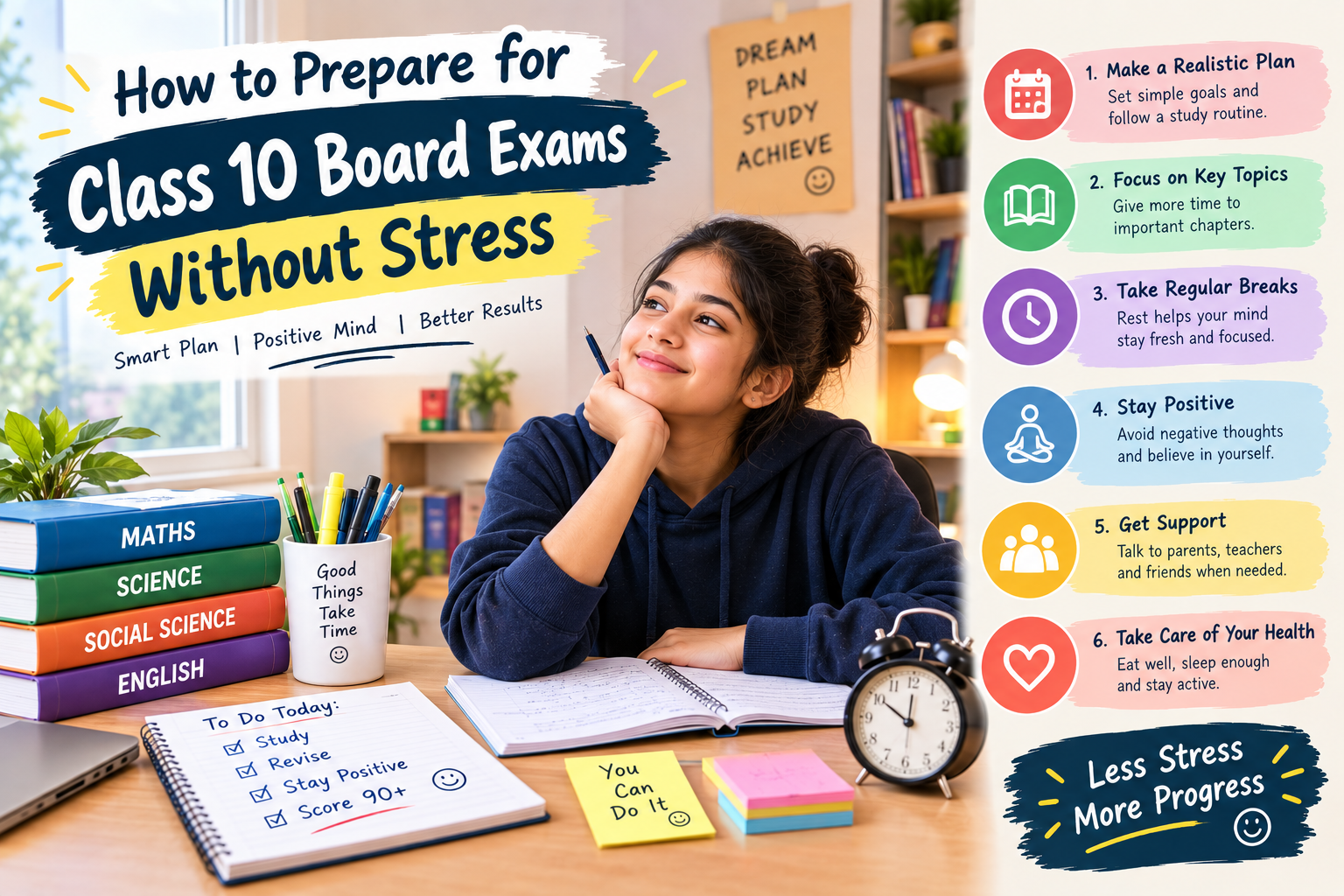
Class 10 board exams are an important milestone in every student’s academic journey. For many students, the thought of board exams brings pressure, long study hours, unfinished chapters, and fear of scoring less than expected. But preparing for Class 10 board exams does not have to be stressful.
With the right study plan, consistent practice, proper revision, and guidance from experienced teachers, students can prepare confidently without feeling overwhelmed. The key is not to study everything at the last moment but to build a practical routine and follow it regularly.
Whether you are preparing for CBSE or ICSE board exams, this guide will help you understand how to prepare for Class 10 board exams without stress and make your preparation more organised and effective.
Why Do Class 10 Board Exams Feel Stressful?
Before finding ways to reduce exam stress, it is important to understand why students feel pressured during Class 10.
Some common reasons include:
- Large portions to complete
- Difficulty understanding certain subjects
- Fear of disappointing parents
- Lack of a proper study schedule
- Leaving revision until the last minute
- Comparing marks with classmates
- Spending too much time on one difficult topic
- Not practising previous question papers
- Poor time management
- Lack of sleep and breaks
The good news is that most of these problems can be managed with a better approach to studying.
Instead of thinking, “I have so much to study,” break your preparation into smaller and achievable targets.
Start Your Class 10 Preparation Early
One of the simplest ways to reduce board exam stress is to avoid last-minute preparation.
You don’t need to study for 10 or 12 hours every day from the beginning. What matters more is consistency.
Start by understanding your syllabus and identifying the subjects and chapters that require more attention. Divide your available time according to the difficulty of each subject.
For example, if you are comfortable with English but struggle with Mathematics, you can give additional practice time to Mathematics while continuing regular revision of English.
Create Small Daily Targets
Instead of setting a target such as “I will complete the entire Science syllabus this week,” create smaller goals.
For example:
- Complete one Science chapter
- Solve 15 Mathematics problems
- Revise one History topic
- Practise one English writing format
- Review important formulas for 20 minutes
Small achievements make studying feel more manageable and help students stay motivated.
Create a Realistic Study Timetable
A timetable is useful only when you can actually follow it.
Many students create complicated schedules with extremely long study hours and then feel discouraged when they cannot follow them. A better approach is to create a realistic routine.
Your timetable should include:
- School hours
- Tuition or coaching classes
- Self-study
- Homework
- Revision
- Practice papers
- Short breaks
- Sleep
- Personal time
Follow the 3-Part Study Method
You can divide your daily study into three simple sections:
1. Learn: Understand a new topic or chapter.
2. Practise: Solve questions based on what you studied.
3. Revise: Quickly review previously studied topics.
This approach helps you avoid simply reading textbooks without actually understanding or practising the concepts.
Understand Concepts Instead of Memorising Everything
One of the biggest mistakes students make during board preparation is trying to memorise every answer.
Memorisation has its place, especially for definitions, formulas, dates, terminology, and certain theoretical topics. However, understanding the concept makes revision much easier.
For subjects like Mathematics and Science, focus on understanding:
- Why a formula works
- How to apply a concept
- What steps are required to solve a problem
- Why a particular answer is correct
- How different concepts are connected
Once you understand the concept, you will find it easier to answer questions that are presented differently from textbook examples.
Give Extra Attention to Mathematics and Science
Mathematics and Science can become challenging when students have gaps in their understanding.
Regular practice is more effective than studying these subjects only before examinations.
If you need additional academic support, science group tuition in Thane can provide students with structured learning and opportunities to clear doubts regularly.
Similarly, students looking for group tuition in Thane can benefit from guided practice, regular tests, and teacher support while preparing for their board examinations.
How to Study Mathematics Effectively
For Mathematics, don’t spend your entire study session reading solved examples.
Instead:
- Understand the concept.
- Study one or two examples.
- Solve questions without looking at the solution.
- Mark questions you find difficult.
- Revisit those questions later.
- Practise similar problems again.
Maintain a separate formula sheet for quick revision.
Use Active Revision Techniques
Simply reading the same chapter multiple times may not be the most effective way to revise.
Try active revision methods such as:
Self-Questioning
After completing a topic, close your book and ask yourself:
- What did I learn?
- What are the important points?
- Can I explain this concept to someone else?
- Which parts do I still find confusing?
Flashcards
Flashcards can be useful for formulas, definitions, vocabulary, dates, scientific terms, and other short information.
Teach Someone Else
Try explaining a difficult topic to a friend, sibling, or even yourself.
If you can explain it clearly without looking at your book, you probably understand the topic well.
Solve Previous Years’ Question Papers
Previous years’ papers can help students understand the structure and style of board examinations.
They also help you identify:
- Frequently tested concepts
- Question patterns
- Mark distribution
- Areas where you make mistakes
- How much time you need to complete a paper
Don’t wait until the final week to start solving papers.
Once you have completed a reasonable portion of your syllabus, begin practising sample papers and previous examination papers regularly.
Analyse Your Mistakes
Completing a paper is only half the job.
Spend time checking your answers and identifying mistakes.
Create a small “mistake notebook” where you record:
- Wrong formulas
- Calculation mistakes
- Concepts you misunderstood
- Questions you left incomplete
- Common grammar or presentation mistakes
Review this notebook regularly.
Don’t Ignore Languages and Other Subjects
Students often spend most of their preparation time on Mathematics and Science and leave languages or social science for later.
This can create unnecessary pressure near the examinations.
Give every subject regular attention.
For languages, focus on:
- Grammar
- Writing formats
- Reading comprehension
- Literature
- Important themes and characters
- Answer presentation
For Social Science, use short notes, timelines, maps, charts, and topic-wise revision to make large portions easier to remember.
Take Regular Breaks While Studying
Studying continuously for several hours does not automatically mean better preparation.
Your brain needs short breaks to stay focused.
For example, after completing a focused study session, take a short break. Walk around, drink water, stretch, or simply relax for a few minutes.
Avoid turning a five-minute break into a one-hour social media session.
The purpose of a break is to refresh your mind so you can return to studying with better concentration.
Sleep Is Part of Your Preparation
Students sometimes reduce their sleeping hours because they believe extra study time will improve their marks.
In reality, poor sleep can make it harder to concentrate, remember information, and stay calm.
Try to maintain a regular sleep schedule, especially during the weeks before your board examinations.
A fresh mind is much more useful than an exhausted one.
Avoid Comparing Your Preparation With Others
Every student has a different learning speed.
Your friend may finish a chapter in two hours while you may need three hours. That does not mean you are behind.
Instead of asking:
“How many chapters has everyone else completed?”
ask:
“What can I improve today?”
Focus on your own progress.
Your goal should be to understand the syllabus, strengthen weak areas, practise regularly, and enter the examination hall prepared.
Choose the Right Academic Support
Sometimes students work hard but still struggle because they don’t have someone to guide them when they get stuck.
This is where structured tuition can help.
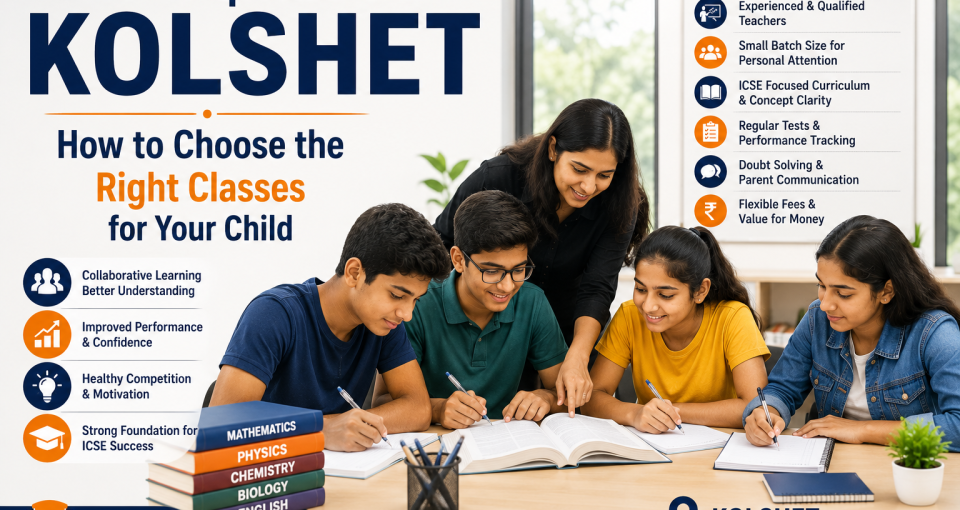
A good tuition environment should not simply focus on completing chapters. Students should receive opportunities to ask questions, practise concepts, understand mistakes, and prepare according to their board syllabus.
For students searching for group tuitions in Airoli, the right learning environment can provide structured academic support and regular practice.
Students following the CBSE curriculum can also explore CBSE tuitions in Airoli for focused preparation and guidance.
Similarly, students preparing under the ICSE curriculum can consider ICSE tuitions in Kalwa for subject-specific learning and board preparation.
How Group Tuition Can Make Board Preparation Easier
Group tuition can provide a structured learning environment where students study with peers while receiving guidance from teachers.
Some useful benefits include:
Regular Doubt Resolution
Students can ask questions when they don’t understand a concept instead of carrying the same doubt into the next chapter.
Consistent Practice
Regular worksheets, tests, and assignments encourage students to practise throughout the academic year.
Personal Attention
Smaller batches can make it easier for teachers to identify areas where individual students need additional support.
Healthy Academic Environment
Studying alongside other students can create a focused learning atmosphere and encourage students to stay consistent.
Make Revision Your Priority Before the Exams
When the board exams are approaching, your focus should gradually move from learning new material to revision and practice.
A simple revision strategy can look like this:
First Revision: Review the complete syllabus and identify weak chapters.
Second Revision: Focus on important concepts, formulas, definitions, and frequently practised questions.
Third Revision: Solve sample papers and previous question papers under examination conditions.
Final Revision: Review short notes, formulas, important points, and mistakes.
Don’t try to learn an entirely new chapter at the last moment unless it is necessary. Focus on strengthening what you already know.
Learn How to Manage Time During the Exam
Preparation is not only about knowing the answers. You also need to know how to use your examination time.
During practice papers, try to complete the paper within the actual examination duration.
Develop the habit of:
- Reading questions carefully
- Planning your answers
- Not spending too long on one question
- Leaving enough time for revision
- Checking calculations
- Reviewing unanswered questions
Good time management can help prevent panic during the actual examination.
Keep Your Study Space Organised
A cluttered study area can make it harder to concentrate.
Keep your essential materials nearby:
- Textbooks
- Notebooks
- Stationery
- Formula sheets
- Revision notes
- Practice papers
Keep your phone away when studying if it regularly distracts you.
A simple and organised study environment can make your study sessions more productive.
Parents Can Also Help Reduce Exam Stress
Board exam preparation is not only a student’s responsibility.
Parents can support children by creating a positive environment at home.
Instead of repeatedly asking:
“How many marks will you get?”
try asking:
“Which topic are you working on today?”
Encourage effort, consistency, and improvement.
Students need support and confidence, especially when they face a difficult subject or receive lower marks in a practice test.
A poor score in a practice test is not the final result. It is an opportunity to identify what needs improvement.
A Simple 30-Day Board Exam Preparation Plan
If your exams are approaching, you can divide your preparation into four stages.
Days 1–7: Identify Weak Areas
Review every subject and identify chapters that require more attention.
Create a list of strong, average, and weak topics.
Days 8–15: Strengthen Concepts
Focus on weak chapters. Read the concepts carefully, ask questions, and practise related problems.
Days 16–23: Practice Papers
Start solving sample papers and previous years’ papers.
Analyse every mistake after completing a paper.
Days 24–30: Final Revision
Focus on:
- Formulas
- Important definitions
- Key concepts
- Difficult questions
- Short notes
- Mistake notebook
- Writing practice
Avoid unnecessary panic during the final days.
10 Simple Tips to Prepare for Class 10 Boards Without Stress
Here is a quick checklist students can follow:
- Start preparation early.
- Make a realistic timetable.
- Set small daily goals.
- Understand concepts instead of blindly memorising.
- Practise Mathematics regularly.
- Revise Science concepts frequently.
- Solve previous years’ papers.
- Maintain a mistake notebook.
- Take proper breaks and sleep well.
- Stay consistent instead of studying only at the last moment.
The most important thing is consistency. Even two or three focused hours every day can make a significant difference when maintained over several months.
Why Choose Vijay Group Tuitions for Class 10 Preparation?
At Vijay Group Tuitions, the focus is on creating a supportive and goal-oriented learning experience for students.
Students receive mentoring from distinguished IIT Bombay alumni along with guidance from expert and highly qualified teachers.
The learning approach includes:
- Goal-driven tutoring
- CBSE and ICSE aligned tests
- Interactive doubt resolution sessions
- Small batch sizes
- Personalised attention
- Regular academic practice
- Flexible payment options
The objective is not simply to help students complete their syllabus but to help them develop better understanding, confidence, and examination readiness.
With branches serving Thane, Kolshet, and Kalwa, students can access structured tuition support closer to their learning needs.
Final Words
Class 10 board exams are important, but they don’t have to become a source of constant stress. A well-planned routine, regular revision, consistent practice, proper sleep, and the right academic guidance can make board preparation much more manageable.
Don’t wait until the final month to start taking your preparation seriously. Start with small steps today. Complete one chapter, solve a few questions, revise your mistakes, and gradually build your confidence.
Remember, successful board preparation is not about studying all day. It is about studying consistently, understanding what you learn, and knowing how to apply it in the examination.
If you are looking for structured academic support, experienced teachers, small batches, and personalised guidance for Class 10 preparation, explore Vijay Group Tuitions and give your child the right environment to learn and grow.